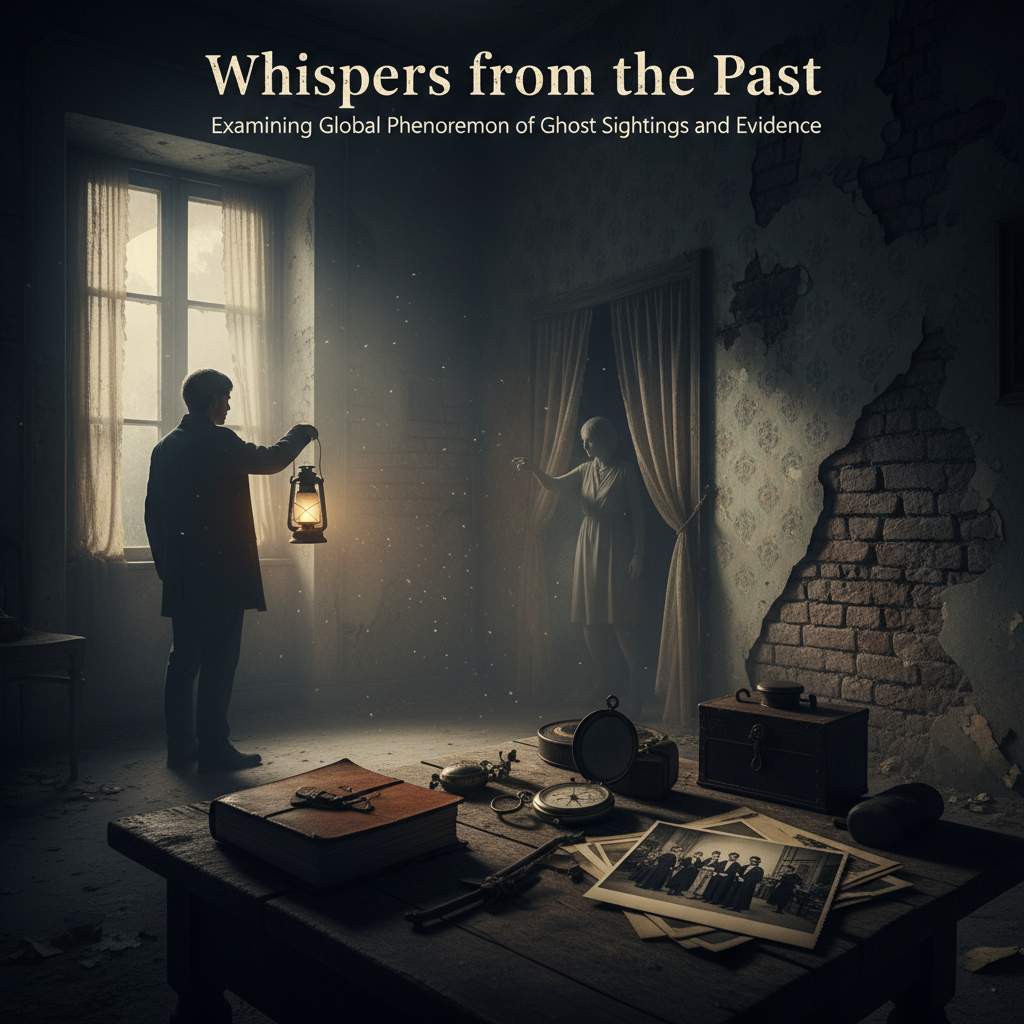

From ancient folklore to modern-day viral videos, the concept of ghosts — spectral echoes of the deceased — has captivated humanity across cultures and centuries. These elusive entities, often described as disembodied spirits or lingering energies, manifest in countless tales of haunted houses, unexplained phenomena, and profound personal encounters. But what lies beneath the enduring fascination with these whispers from the past? Is it a universal psychological yearning, a cultural construct, or does it point to something more fundamental about the nature of reality and consciousness?

The global tapestry of ghost stories is rich and varied. In Western traditions, ghosts are often depicted as transparent, sorrowful figures bound to earthly locations by unfinished business or tragic ends. Asian cultures, particularly in Japan and China, feature intricate classifications of spirits, from benevolent ancestors to vengeful yūrei and gui, demanding respect or appeasement. African spiritual traditions frequently incorporate the veneration of ancestors, whose spirits are believed to actively participate in the lives of the living, offering guidance or warnings. This universality suggests that the human experience of encountering the inexplicable, or at least conceiving of it, transcends geographical and linguistic boundaries.
The very word “ghost” conjures images of the unknown, a liminal space between life and death. For many, a ghost sighting is not merely a story but a deeply personal, often unsettling, experience that challenges their understanding of the world. These encounters can range from fleeting glimpses of apparitions to poltergeist activity involving physical disturbances, cold spots, disembodied voices, or inexplicable movements of objects. The sheer volume of these anecdotal accounts, persistent through millennia, forms a compelling narrative, even in the absence of definitive empirical proof.
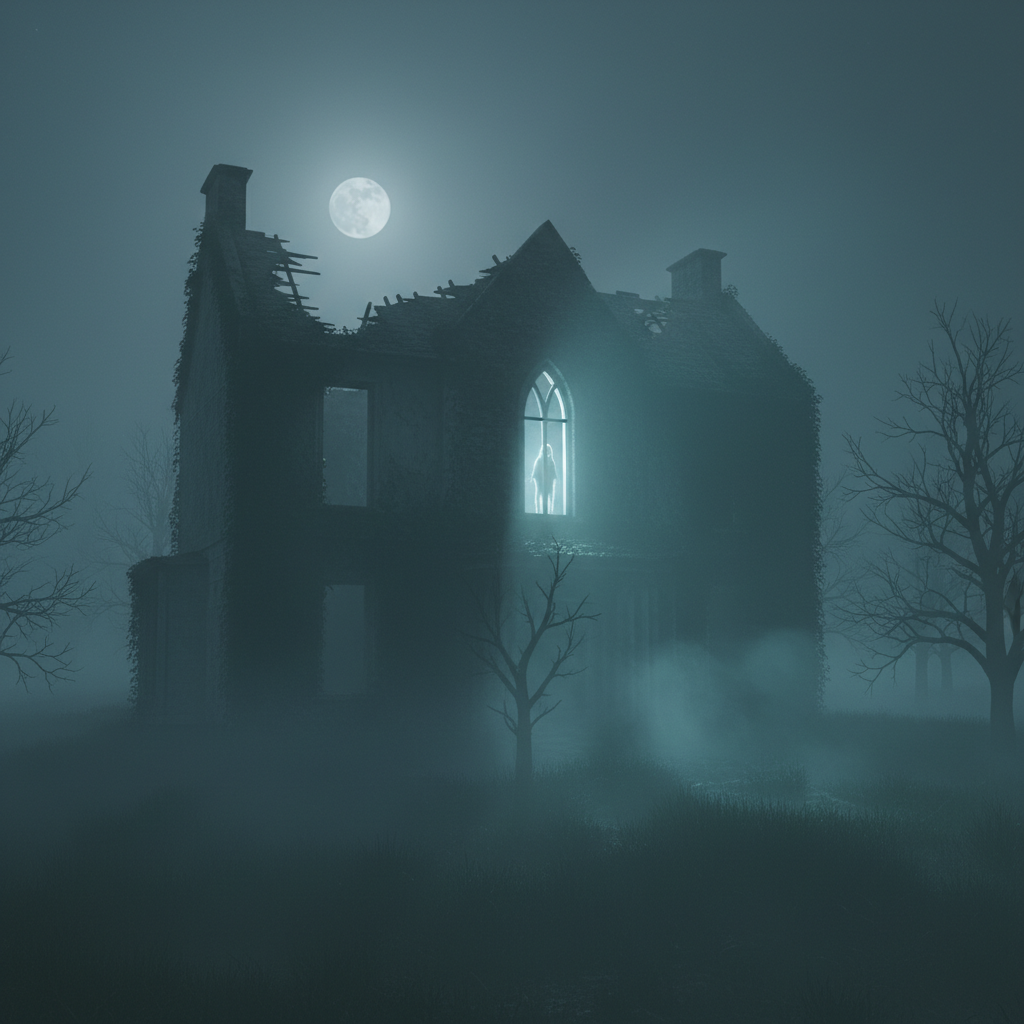
!An old, decaying manor house shrouded in mist, with a faint, ethereal glow emanating from an upper window, suggesting a mysterious presence within.
The enduring mystery of spectral presences continues to captivate and challenge our understanding of the unseen.
Historical Echoes: Tracing the Origins of Spectral Beliefs
Belief in spirits of the dead predates recorded history, woven into the very fabric of early human societies. Ancient Egyptian texts, such as the Book of the Dead, describe elaborate rituals to guide the deceased into the afterlife, implicitly acknowledging the existence of a spiritual essence that persists beyond corporeal death. Roman culture had its lares* and *penates, household gods and ancestral spirits believed to protect the family. In ancient Greece, philosophers like Plato speculated on the soul’s immortality, laying groundwork for later Western theological views on spirits.
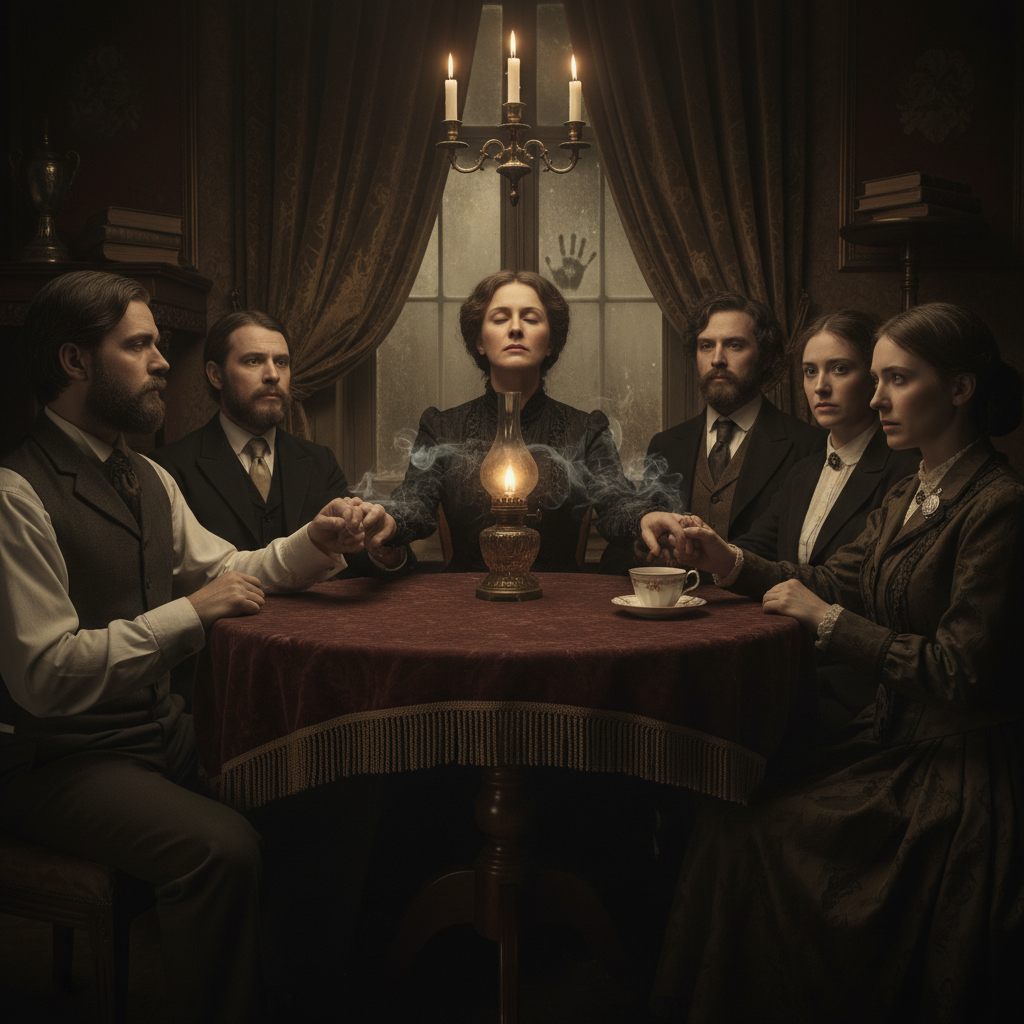
The rise of Christianity introduced concepts of saints, angels, and demons, but also the notion of souls in purgatory or lingering on Earth. Medieval European folklore was replete with tales of restless spirits, banshees, and specters haunting battlefields and castles. The Victorian era, fueled by spiritualism and the trauma of widespread mortality, saw a surge in séances, ghost photography, and mediums attempting to bridge the gap between the living and the dead. This historical continuity underscores a persistent human quest to understand what happens after death and whether our consciousness truly ceases.
What defines a ghost sighting?
A ghost sighting is generally defined as the perception of an apparition, presence, or other phenomenon attributed to the spirit of a deceased person or entity. This can include visual manifestations, auditory experiences (voices, footsteps), tactile sensations (cold spots, touches), or psychokinetic events (moving objects, electrical disturbances).
The Human Mind and the Paranormal: Psychological Perspectives
While millions worldwide report ghost sightings, scientific consensus largely attributes these experiences to psychological phenomena, misinterpretations, or environmental factors. The human brain is a master pattern-recognizer, sometimes to its own detriment. This tendency can lead to perceiving faces in inanimate objects (pareidolia) or hearing voices in random noise (auditory pareidolia).
Direct Answer: Psychological explanations for ghost sightings often include pareidolia, apophenia, cognitive biases, suggestibility, vivid dreams, sleep paralysis, and the brain’s inherent tendency to seek patterns and meaning, even where none objectively exist.
Sleep paralysis, a temporary state where one is conscious but unable to move, often accompanied by vivid hallucinations, is a frequently cited explanation for experiences of shadowy figures or oppressive presences. Infrasound, low-frequency sound waves imperceptible to the human ear, has been hypothesized to cause feelings of unease, chills, or even visual distortions due to its effect on the inner ear and brain. Carbon monoxide poisoning, known to cause hallucinations and disorientation, has also been linked to reports of hauntings in old, poorly ventilated buildings.
Moreover, the power of suggestion and cultural conditioning cannot be underestimated. If a person believes a place is haunted, they are more likely to interpret ambiguous stimuli (a creaking floorboard, a flickering light) as paranormal evidence. Mass hysteria or collective suggestibility can also play a role, as seen in historical cases of alleged hauntings affecting multiple individuals simultaneously. The brain’s capacity for memory, grief, and emotional projection can also create powerful internal experiences that feel external and real.
!A lone figure stands in a dimly lit, empty hallway of an old, grand building, looking towards a barely visible, swirling mist at the far end.
The human mind’s capacity for perception and interpretation often shapes our understanding of ambiguous phenomena.
How do different cultures interpret apparitions?
Interpretations of apparitions vary widely across cultures. In some, they are seen as benevolent ancestors offering guidance; in others, as malevolent spirits requiring appeasement; or as trapped souls seeking resolution. These beliefs are deeply intertwined with local religions, folklore, and historical narratives.
The Scientific Search for Evidence: A Challenging Pursuit
Despite centuries of claims, mainstream science has yet to find empirical, reproducible evidence for the existence of ghosts. Paranormal investigators often use equipment like EMF meters, thermal cameras, and voice recorders (for Electronic Voice Phenomena, or EVP) in their attempts to detect spectral presences. However, these tools frequently yield ambiguous results that can be attributed to natural electromagnetic fields, temperature fluctuations, or audio pareidolia.
The fundamental challenge lies in the elusive nature of the phenomena. Ghosts, by definition, are often described as non-physical or existing outside the normal parameters of detection. This makes them difficult to study under controlled conditions, which is the cornerstone of scientific inquiry. Skeptics argue that until a ghost can be reliably observed, measured, and its existence replicated in a laboratory setting, it remains firmly in the realm of belief rather than verifiable fact.
However, some researchers within the field of parapsychology continue to explore the possibility of non-physical consciousness or energy forms. They investigate concepts like residual energy, where strong emotions or events might leave an energetic imprint on a location, or intelligent hauntings, suggesting conscious interaction. While these theories remain largely outside mainstream science, they highlight an ongoing curiosity about phenomena that defy conventional explanation.
Are there scientific explanations for ghost experiences?
Yes, many experiences attributed to ghosts have potential scientific or psychological explanations, including sleep paralysis, pareidolia, infrasound, electromagnetic field fluctuations, carbon monoxide poisoning, and the power of suggestion, all of which can induce sensory experiences or feelings of presence.
Cultural Narratives and the Enduring Appeal
Beyond scientific scrutiny, the cultural significance of ghost stories is undeniable. They serve various functions: cautionary tales, explanations for tragic deaths, ways to process grief, or simply thrilling entertainment. From Charles Dickens’s “A Christmas Carol” to modern horror films, ghosts are powerful narrative devices that explore themes of morality, redemption, fear, and the unknown.
The enduring appeal of ghost stories might also stem from a deep-seated human desire for meaning and connection beyond mortality. The idea that loved ones might still be present, even in a different form, offers comfort to some, while the fear of the unknown keeps others captivated. Haunted locations become cultural landmarks, drawing tourists and paranormal enthusiasts alike, testament to the powerful hold these narratives have on the collective imagination. The stories evolve with technology, moving from campfire tales to digital recordings, yet the core mystery remains.
!A dimly lit, ancient stone staircase winding upwards into darkness, with a single flickering candle at the bottom casting long, dancing shadows.
Centuries of folklore and personal accounts continue to fuel the human fascination with the spectral realm.
What is the psychological impact of believing in ghosts?
Believing in ghosts can have varied psychological impacts. For some, it offers comfort in the idea of an afterlife or continued connection with deceased loved ones. For others, it can induce fear, anxiety, or hypervigilance, particularly if they believe they are personally experiencing a haunting. It can also shape one’s worldview and interpretation of ambiguous events.
Personal Encounters: The Subjectivity of Experience
For individuals who claim to have experienced a ghost sighting, the event often feels undeniably real and profoundly impactful, regardless of scientific explanations. These personal narratives, shared across generations and cultures, form the bedrock of belief in the paranormal. A cold touch, a whispered name, a fleeting shadow – these moments can shake one’s foundational understanding of reality.
The subjective nature of these experiences makes them difficult to quantify or dismiss. To tell someone their profound encounter was merely a trick of the light or a psychological projection can invalidate a deeply personal truth. This tension between subjective experience and objective evidence lies at the heart of the ghost phenomenon. It forces us to confront the limits of our perception and the boundaries of what we consider possible.
Some theories propose that certain individuals might be more receptive to subtle energies or sensory inputs that others dismiss. Whether this receptivity is psychological, neurological, or taps into an as-yet-undiscovered aspect of reality remains a profound question. The consistency of certain ghost archetypes and experiences across disparate cultures also invites contemplation. Is it merely shared human psychology, or could there be a common underlying phenomenon that manifests through diverse cultural lenses?
Can animals sense ghosts?
While many pet owners report their animals reacting to unseen presences, there is no scientific consensus that animals can sense ghosts. Their reactions are more commonly attributed to heightened senses detecting stimuli (e.g., infrasound, subtle vibrations, scents) imperceptible to humans, or to mirroring their owners’ anxiety or focus.

The global phenomenon of ghost sightings and the enduring belief in spectral presences present a fascinating intersection of psychology, culture, history, and the limits of scientific understanding. While skeptics offer compelling rational explanations, and science demands verifiable proof, the sheer volume and consistency of anecdotal reports continue to fuel the mystery.
Perhaps the allure of ghosts lies not in their definitive existence, but in what they represent: a challenge to our mortality, a hope for continuity, and a reminder of the vast unknowns that still surround the human condition. They exist in the peripheral vision of our collective consciousness, a whisper from the past that continues to echo in the present, inviting us to ponder the boundaries of life, death, and what might lie beyond. As long as humans ponder the great questions of existence, the whispers from the past will likely continue to resonate, leaving us to wonder: what truly lingers when we are gone?